
Petrochemicals
In brief. In summer, cooling water from cooling towers cannot cool light hydrocarbon fractions to the required 32…40 °C. A Thermax absorption chiller running on waste steam delivers noticeably colder water: at a large refinery, three 8,750 kW absorption chillers supply 22 °C water for propylene recovery.
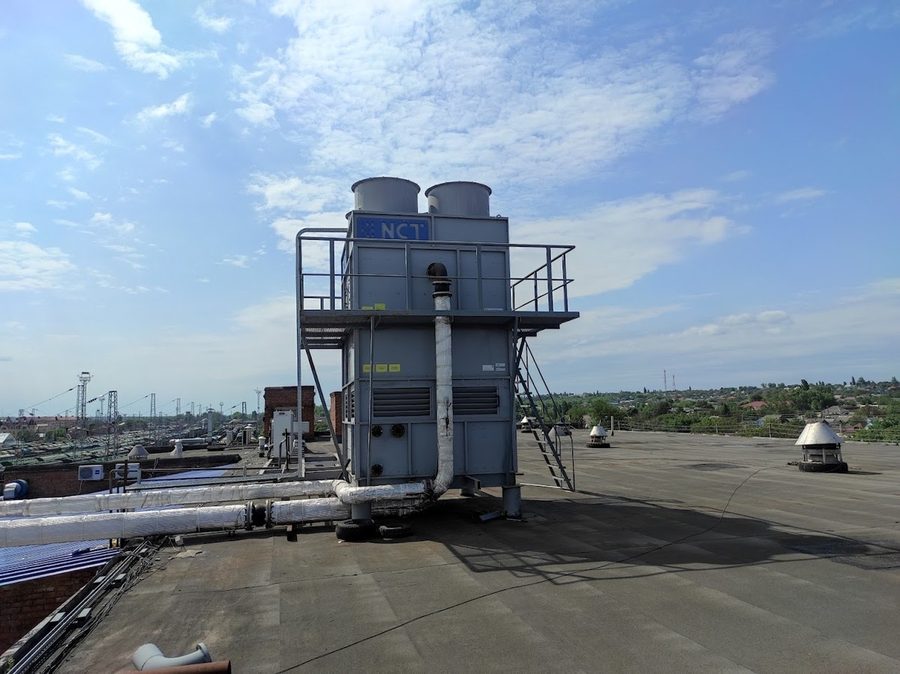
Petrochemical plants and oil refineries have many units where light fractions are separated from hydrocarbon feedstock. Their vapors must be fully condensed and cooled to 32…40 °C. In summer, conventional heat exchangers with cooling water cannot cope with this, while such plants have plenty of waste heat. That is why the working solution is a lithium bromide absorption chiller, which produces cooling from this heat.
Why does petrochemistry need artificial cooling?
Light fractions are cooled with cooling water. In summer, it enters the heat exchangers at 25…30 °C and leaves at 35…45 °C.
| Parameter | Value |
|---|---|
| Required product temperature | 32…40 °C |
| Cooling water at the heat exchanger inlet in summer | 25…30 °C |
| Cooling water at the outlet in summer | 35…45 °C |
With such water, it is practically impossible to cool the product to the required temperature. A source of water colder than a cooling tower is needed, and an absorption chiller running on waste steam or hot water solves this task without additional load on the power grid.
In which processes are absorption chillers used?
- propylene recovery;
- vacuum distillation of oil;
- monoethylene glycol production;
- natural gas and diesel fuel treatment;
- wastewater treatment.
How does it work, using propylene recovery as an example?
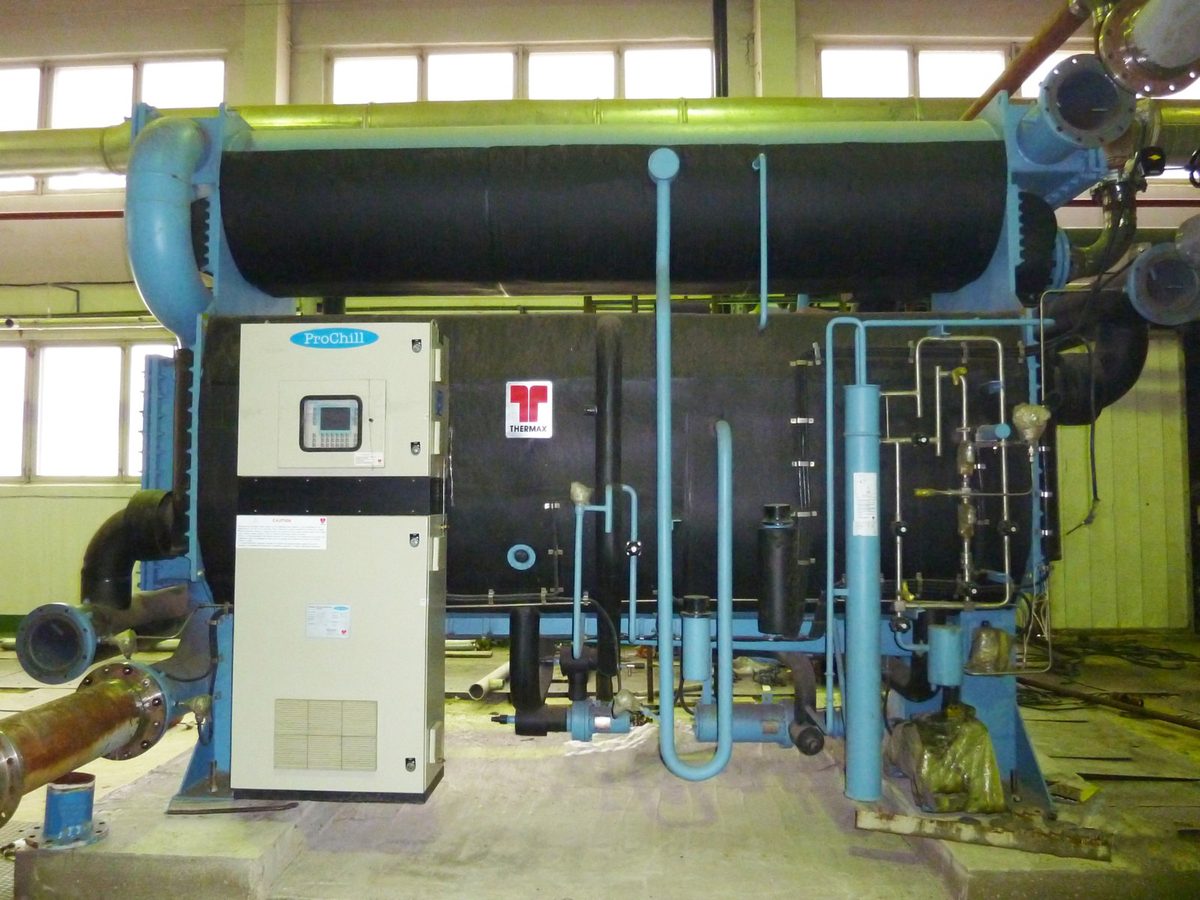
At one of the world's largest oil refineries, Reliance Industries Ltd., three Thermax absorption chillers of 8,750 kW each are installed. This is a project of the manufacturer, Thermax; we cite it as an industry example.
Chilled water from the absorption chillers is used to recover propylene from the gases of the fluid catalytic cracking unit. This process converts heavy, high-boiling oil fractions into fuel, gaseous olefins and other products.
| Parameter | Value |
|---|---|
| Number of Thermax absorption chillers | 3 |
| Capacity of each machine | 8,750 kW |
| Heat source | waste steam, 3.5 bar |
| Chilled water temperature | 22 °C |
| What is cooled | naphtha, the propylene absorbent |
Thermax proposed replacing the cooling tower water with water from the absorption chillers. The colder the naphtha, the better it absorbs propylene, so recovery became faster.
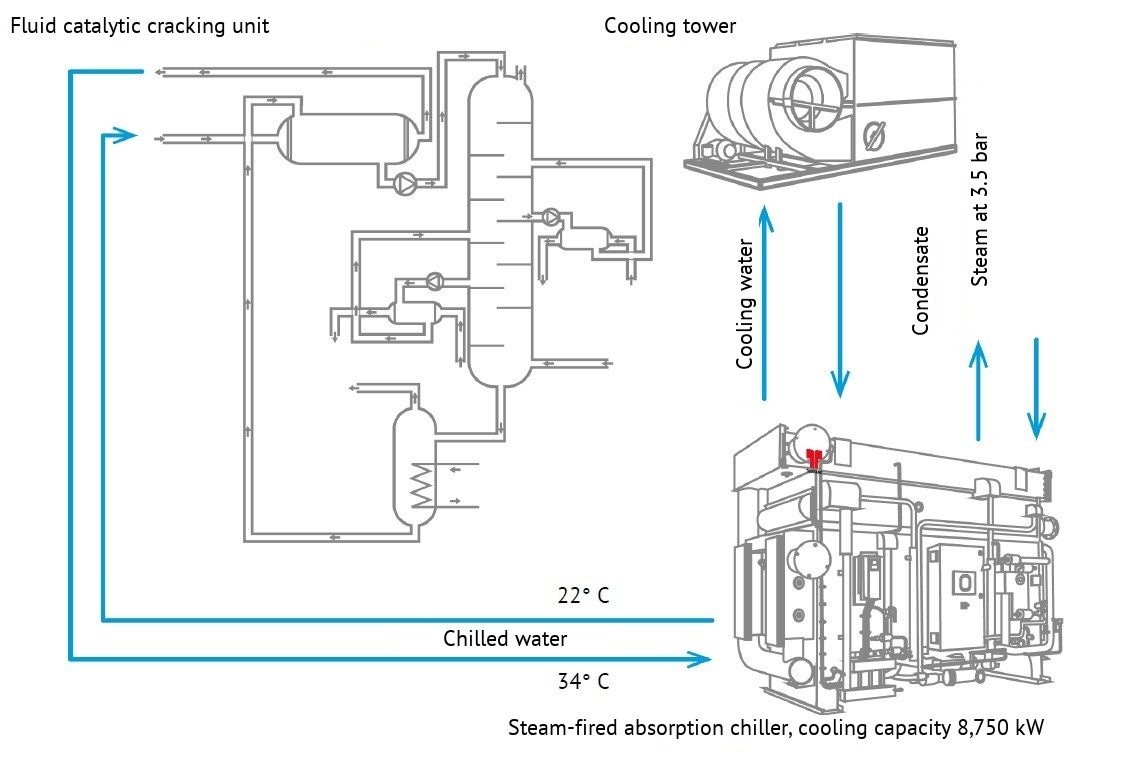
The propylene recovery process, step by step
The hot gas from the cracking unit contains a lot of propylene. It is valuable to industry, so it is recovered.
- The hot gas is fed into the bottom of the absorber, the absorption column.
- Naphtha serves as the absorbent. It is cooled with water in a heat exchanger.
- The cooled naphtha is fed into the column. It absorbs propylene from the hot gas well.
- As it absorbs the hot propylene, the naphtha heats up and works less well. So the naphtha and propylene mixture is pumped out of the upper part of the column, cooled in several heat exchangers and returned.
- The spent gas, from which most of the propylene has been recovered, leaves at the top. The naphtha and propylene mixture from the bottom of the column goes to the desorption section.
- In the desorption section, the mixture is heated with steam.
- Propylene boils at a lower temperature than naphtha, so it evaporates first and collects at the top.
- The hot naphtha is taken from the bottom, cooled in a heat exchanger and returned to the absorption column.
If water from an absorption chiller is supplied at steps 2, 4 and 8 instead of cooling tower water, the naphtha temperature will be noticeably lower, and propylene is recovered faster.
What equipment do we supply?
- Steam-fired and hot water-fired Thermax absorption chillers, for producing cooling from waste heat.
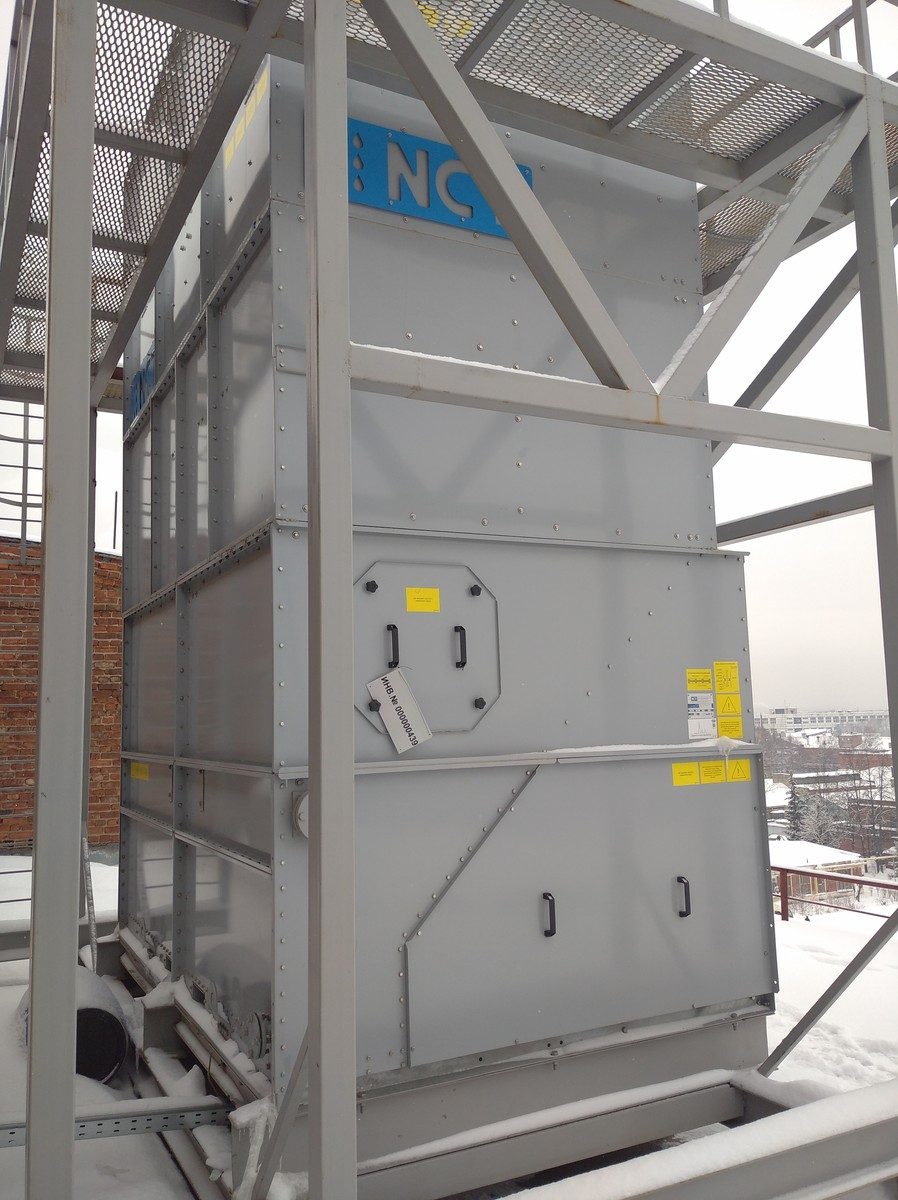
- NCT cooling towers, for recirculating cooling water systems and for cooling the absorption chillers themselves; for aggressive environments, with NCT Armour polymer coating.
- NCT dry coolers of our own manufacture, for closed circuits with no water consumption. At refinery and chemical sites, their heat exchangers are given NCT Protect coating, tested in salt spray (ASTM B117, more than 10,000 hours) and in moist sulfur dioxide (ASTM G87).
- Control panels and controls.
Which projects have we completed?
- Oil refinery in Uzbekistan (in Russian): an NCT VR cooling tower and a control panel for cooling a process line as part of the plant's modernization. Supply, installation supervision and commissioning.
- Petrochemical plant in Shymkent (in Russian), Kazakhstan: an NCT SVA-2 cooling tower for cooling process water at a new plant.
- SvetlogorskKhimvolokno (in Russian), Belarus: a four-section counterflow NCT VR1S cooling tower with heating and variable frequency control for cooling air compressors. NCT was chosen following a tender.
- Petrochemical plant (in Russian), Bashkortostan: a 1,640 kW SS 40A-CU absorption chiller running on waste steam, water 12/6 °C. The machine cools terephthalic acid in PET production and takes steam from the boiler house; the delivery was made in severe frost.
- Yaroslavl paraffin and wax plant, Rostov (Yaroslavl Region): a 500 kW 2V 2K C-S gas-fired absorption chiller cools the products and supplies hot water at the same time. It is cooled by an NCT VR1 cooling tower with NCT Armour coating, variable frequency control and NCT W2C water treatment. More in the news item about the cooling tower shipment (in Russian).
- NCT cooling towers also work at other oil refineries, among many others the Atyrau refinery in Kazakhstan and the Ilsky refinery in the Krasnodar Territory.
Selected projects are in the Projects section.
How does a project run?
- Engineer consultation and collection of process input data.
- Concept: we assess the waste heat sources and select the scheme.
- Technical specification, layout options and a feasibility study.
- Design, supply, installation supervision and commissioning.
The consultation, layout options and feasibility study are free of charge.
Resources
Cooling schemes
Typical schemes we use in this industry. The numbers on the diagram are the piping components; the key is under each diagram.
Steam-fired absorption chiller: cooling from waste heat
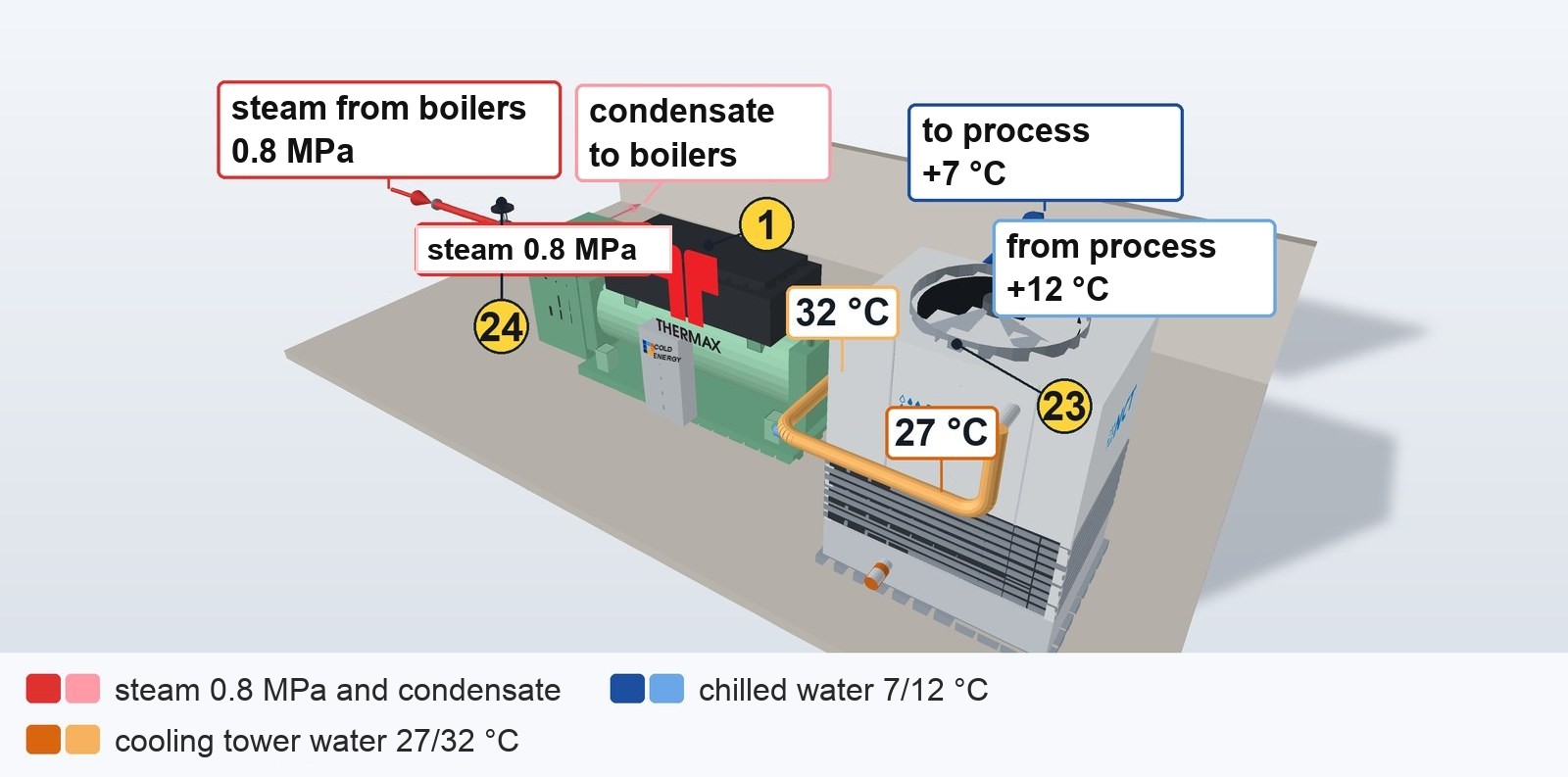
Steam heats the machine's generator, chilled water goes to the process, and the heat of absorption goes to the cooling tower.
Key to the numbers on the diagram
| No. | Component | Purpose |
|---|---|---|
| 1 | Steam-fired Thermax absorption chiller | steam heats the solution, and the machine delivers chilled water without a compressor |
| 23 | NCT cooling tower | rejects the heat of absorption: there is more of it than from a compressor machine of the same capacity |
| 24 | Steam control valve | meters the steam according to the load: the machine holds +7 °C at the outlet |
NCT closed-circuit cooling tower, cutaway view
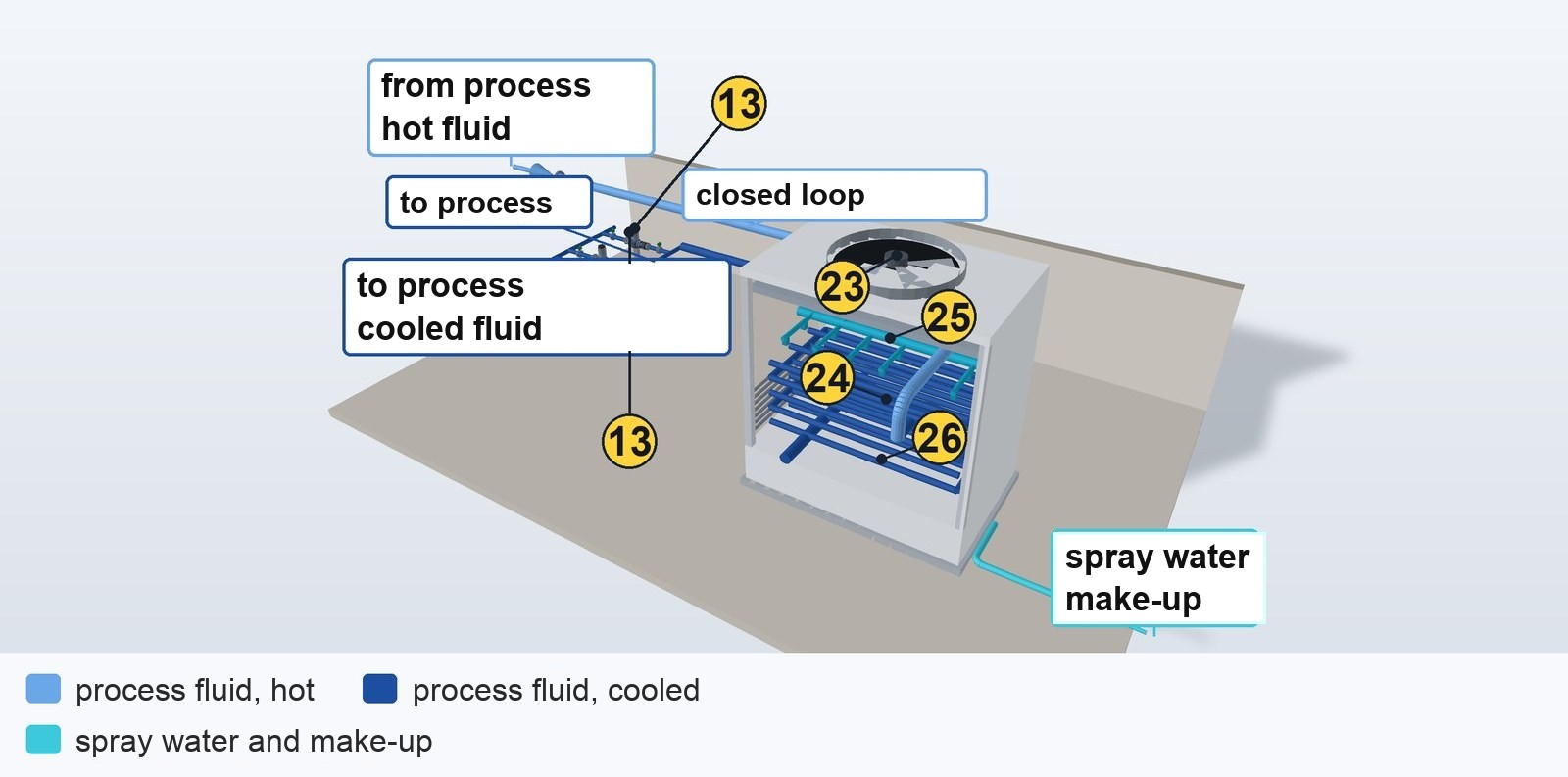
The process fluid flows inside the coil and the spray water flows outside: the circuit stays clean and the heat transfer fluid is not lost.
Key to the numbers on the diagram
| No. | Component | Purpose |
|---|---|---|
| 3 | Butterfly valve | isolates the machine and pumps for repair and flushing; installed in pairs, inlet and outlet |
| 5 | Flexible connector (vibration isolator) | right at the nozzle: damps vibration, does not transfer the pipe's weight and misalignment to the nozzle |
| 13 | In-line pump | circulates water through the circuit; in a pair, duty + standby |
| 14 | Check valve | prevents water from flowing back through the idle pump |
| 23 | NCT e-VRC series closed-circuit cooling tower | the casing is shown with a cutout so the inside is visible |
| 24 | Coil: process fluid inside the tubes | it does not come into contact with air, is not lost to evaporation and does not get contaminated |
| 25 | Spray water outside the coil | water pours onto the tubes and evaporates, carrying away heat: this is a separate circuit, and it is the one that is consumed |
| 26 | Spray water basin | only this water needs make-up, blowdown and water treatment |
Frequently asked questions
There are columns and ether vapors nearby. Does the absorption chiller need to be explosion-proof, and where should it be installed?
The machine itself is usually moved outside the hazardous area, and what remains near the columns is made explosion-proof: the pumps, controls and sensors on the heat transfer fluid. The zone boundaries are set by the plant's design. Keep in mind that the machine needs above-zero temperatures, so moving it out means placing it at a distance in a separate heated module.
Can cooling for the condensers of distillation columns be produced from the heat of process vapors?
Yes, if the heat is surplus and is available the whole time cooling is needed. As a guide, 1 kW of heat gives about 0.75–0.82 kW of cooling on hot water and 1.30–1.45 kW on 4–9 bar steam. The machine comes as a stand-alone unit and is integrated into the existing scheme. The main question here is a different one: where to get cooling during column start-up and shutdown. Usually a chiller is kept nearby as a backup.
Do you make air-cooled heat exchangers, including to drawings and in explosion-proof design?
Yes, we make air-cooled heat exchangers to order. Send a drawing or a questionnaire: the product and its composition, pressure, temperatures, flow rate and zone class. We will also look at which option pays off better. If the product can be cooled through a heat exchanger, for example amine at 12 atm and pH 11–12, we will also calculate a water or glycol circuit with a dry cooler; we manufacture dry coolers ourselves. The heat exchanger steel is chosen according to the product composition.
The evaporator will be made of carbon steel, and we are cooling alkanes and an absorbent. What is not allowed in the medium?
Hydrogen sulfide, oxygen, water, chlorides and any organic acids: with them, the unit will fail from corrosion. That is why the full composition of the medium is needed before selection, not after shipment. Name the impurities too, not only the main product. If they cannot be excluded, a different material is used or the circuits are separated by a heat exchanger.
We will calculate the system for your facility free of charge: submit a request or call +7 (800) 333-49-96.
Watch: absorption chillers (in Russian)
Thermax hot-water absorption chillerLet us size a cooling system for your site
An engineer will select the equipment and send you a calculation. Free of charge, no obligation.