
Waste Heat Recovery
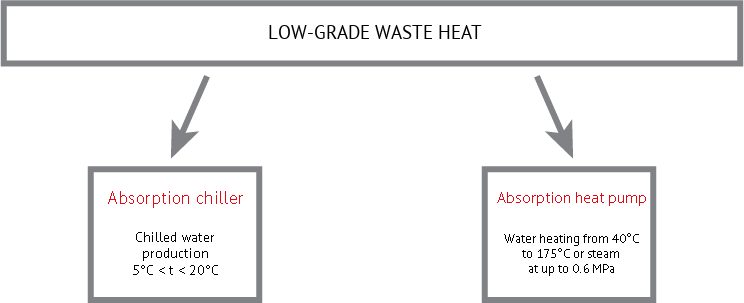
In brief. A plant's waste heat can be turned into cooling or into higher-grade heat. Thermax absorption chillers produce cooling from it, with a limit of −5 °C when running on gas or steam, while absorption heat pumps heat the heat transfer fluid 30–50 °C above the source temperature. Heat savings are 40–50%.
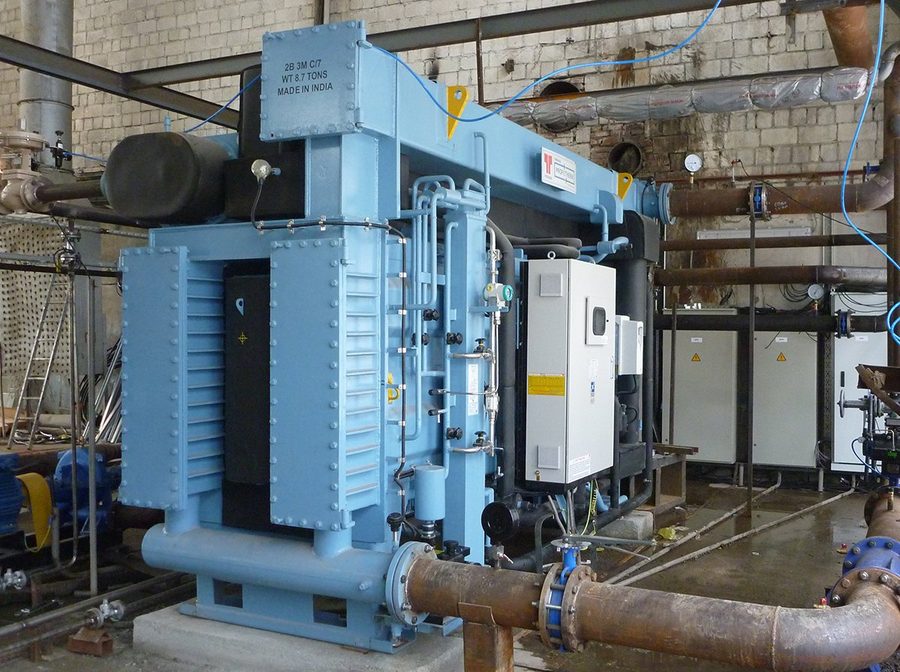
At many plants, low-grade heat is released into the atmosphere: hot water from gas engine generator sets in summer, waste steam from process operations, heat from boiler houses. We recover it with Thermax absorption machines and turn it into cooling or higher-grade heat. This way, the plant pays for energy once and uses it twice.
What problem does heat recovery solve?
The classic example is a gas engine power plant. In winter, its heat goes to space heating, but in summer there is nowhere to use it. A lithium bromide absorption chiller turns this heat into cooling for air conditioning or process needs, so the cost of producing cooling is low. This is how, for example, a plant in Tomsk (in Russian) works.
How does an absorption chiller differ from an absorption heat pump?
Both types of machine work on the same thermodynamic cycle, but in different temperature ranges.
| Machine | What it produces | Result |
|---|---|---|
| Absorption chiller: lithium bromide absorption refrigeration machine | Cooling | Chilled water or coolant, with a limit of −5 °C when running on gas or steam |
| Absorption heat pump: lithium bromide absorption heat pump | Higher-grade heat | Hot water or steam, heated 30–50 °C above the source temperature |
Thermax absorption heat pumps are made for 50 kW to 40 MW of heat, with hot water at the outlet up to 110 °C and a heating coefficient of up to 1.8 for single-stage and up to 2.5 for two-stage machines. When a higher temperature is needed, a heat transformer is used: it takes waste water at 100–155 °C or steam at 1–4 bar and delivers up to 170 °C.
Why is an absorption machine better than a conventional heat exchanger?
A recuperative heat exchanger can only transfer heat from a hot stream to a cold one. An absorption machine can do more:
- cool the heat transfer fluid below the ambient temperature;
- heat the heat transfer fluid 30–50 °C above the temperature of the low-grade heat source.
The heat savings are 40 to 50%.
How does the absorption chiller scheme work?
- The waste heat source, steam or hot water from gas engines or a boiler house, is fed to the absorption chiller.
- Using this heat, the absorption chiller cools water for the consumer: the air conditioning system or a process line.
- The absorption chiller transfers the heat taken from the consumer to the cooling water.
- Cooling towers cool the cooling water and return it to the machine.
Which heat sources are suitable?
- low- and high-pressure steam from a process or a boiler house;
- hot water from a heating network, a boiler house or gas engine cooling jackets;
- equipment exhaust gases;
- direct fuel firing;
- for absorption heat pumps, also geothermal energy or a combination of several sources.
More about hot water schemes is on the Using hot water to produce cooling page.
What equipment do we supply?
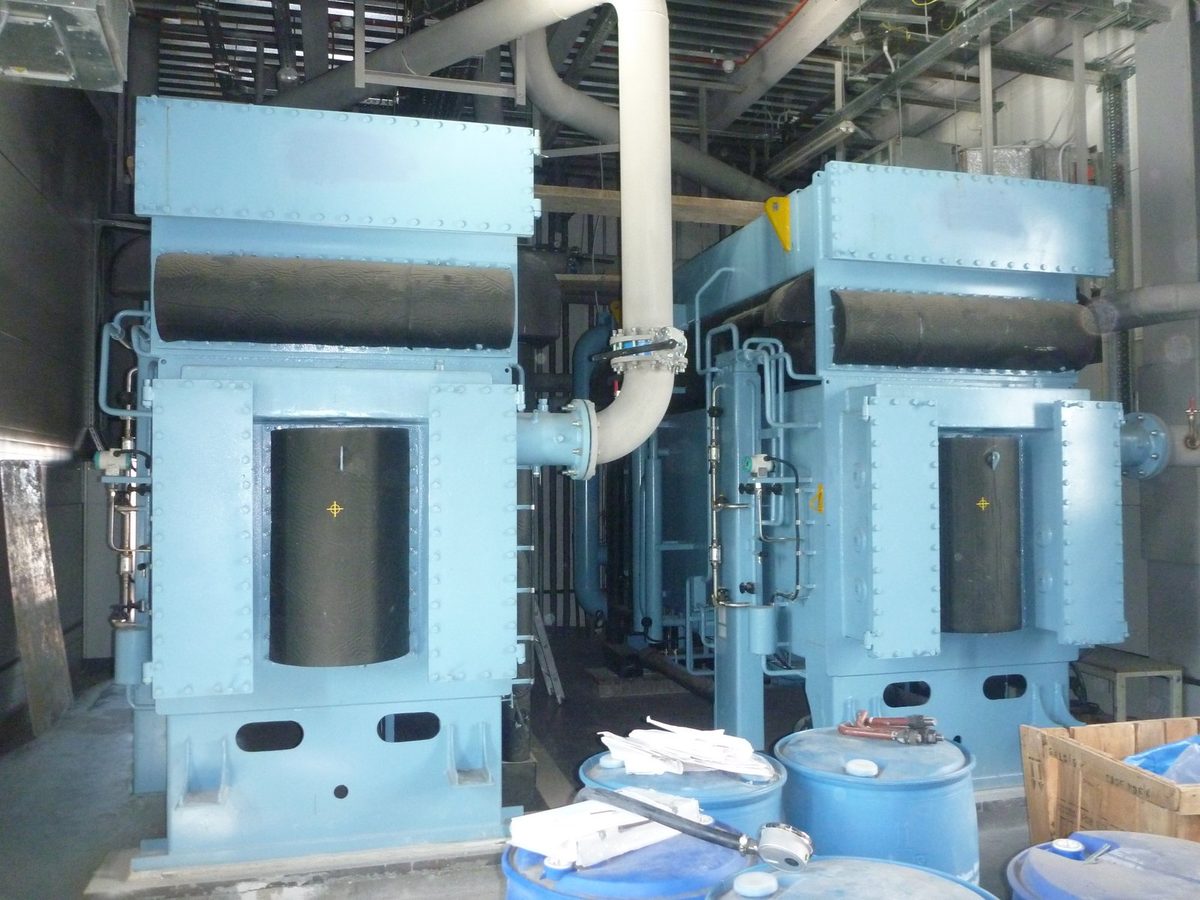
- Thermax absorption chillers and absorption heat pumps. Since 2011, we have been the official and exclusive representative of Thermax in Russia and the CIS.
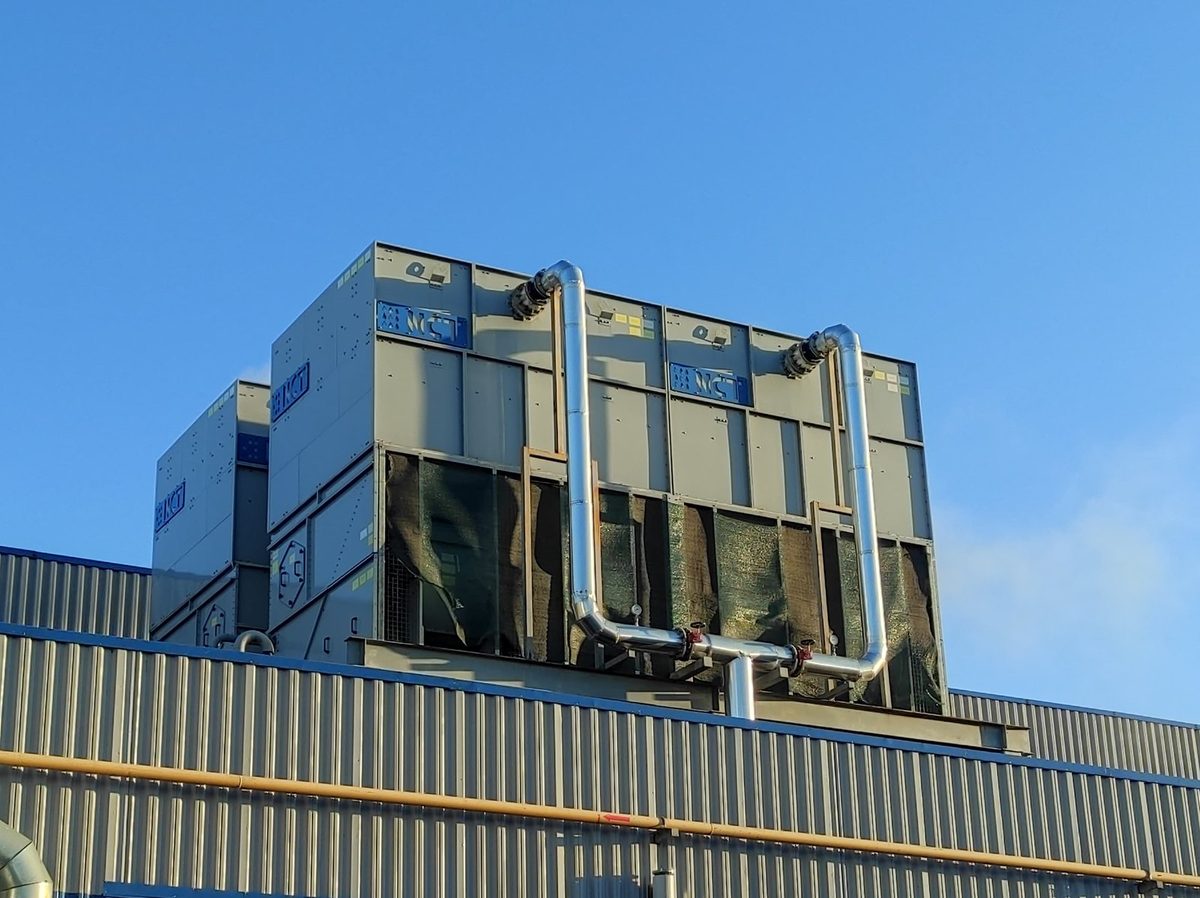
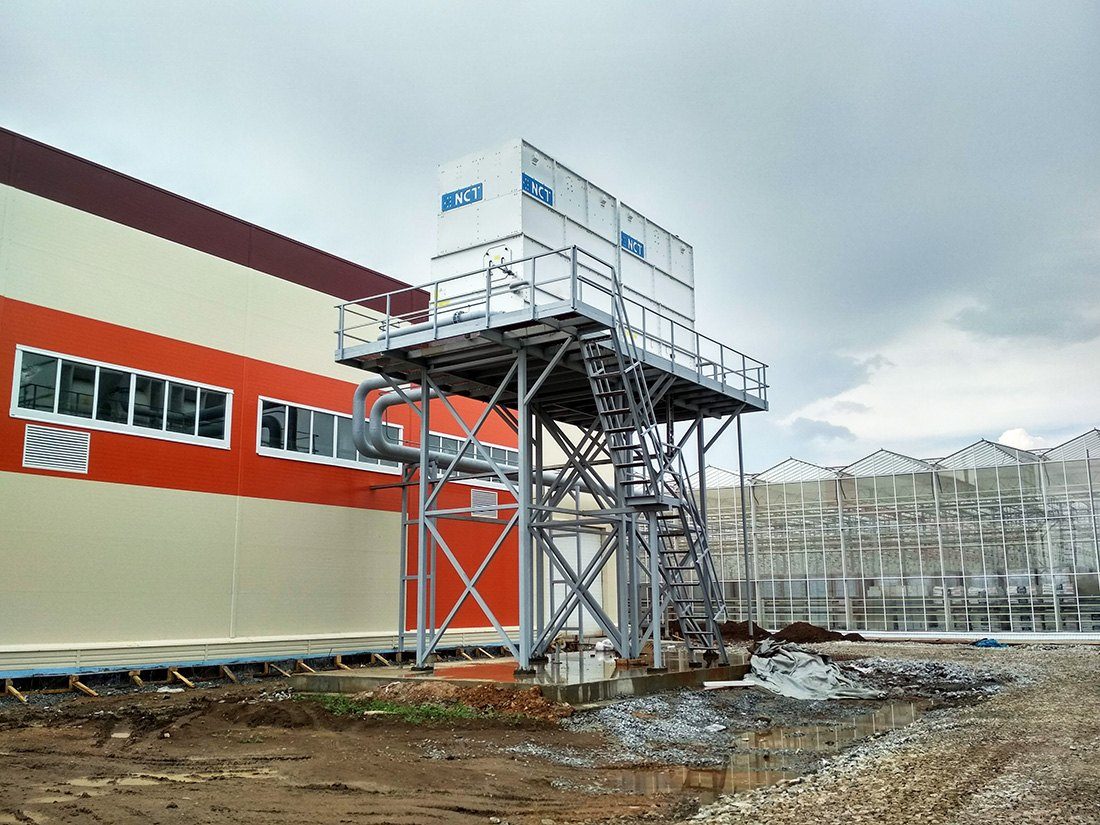
- NCT cooling towers of our own manufacture for cooling the absorption chillers.
- NCT pump skids and chemical water treatment systems.
- Control systems and control panels.
All equipment is in the Equipment section.
Which facilities run on waste heat?
- Petrochemical plant (in Russian), Bashkortostan: a 1,640 kW absorption chiller runs on waste steam and cools water from 12 to 6 °C. The goal of the project is a fast payback through recovery of waste steam.
- Mikran plant (in Russian), Tomsk: two 1,100 kW absorption chillers on hot water from a gas engine plant provide air conditioning for the plant.
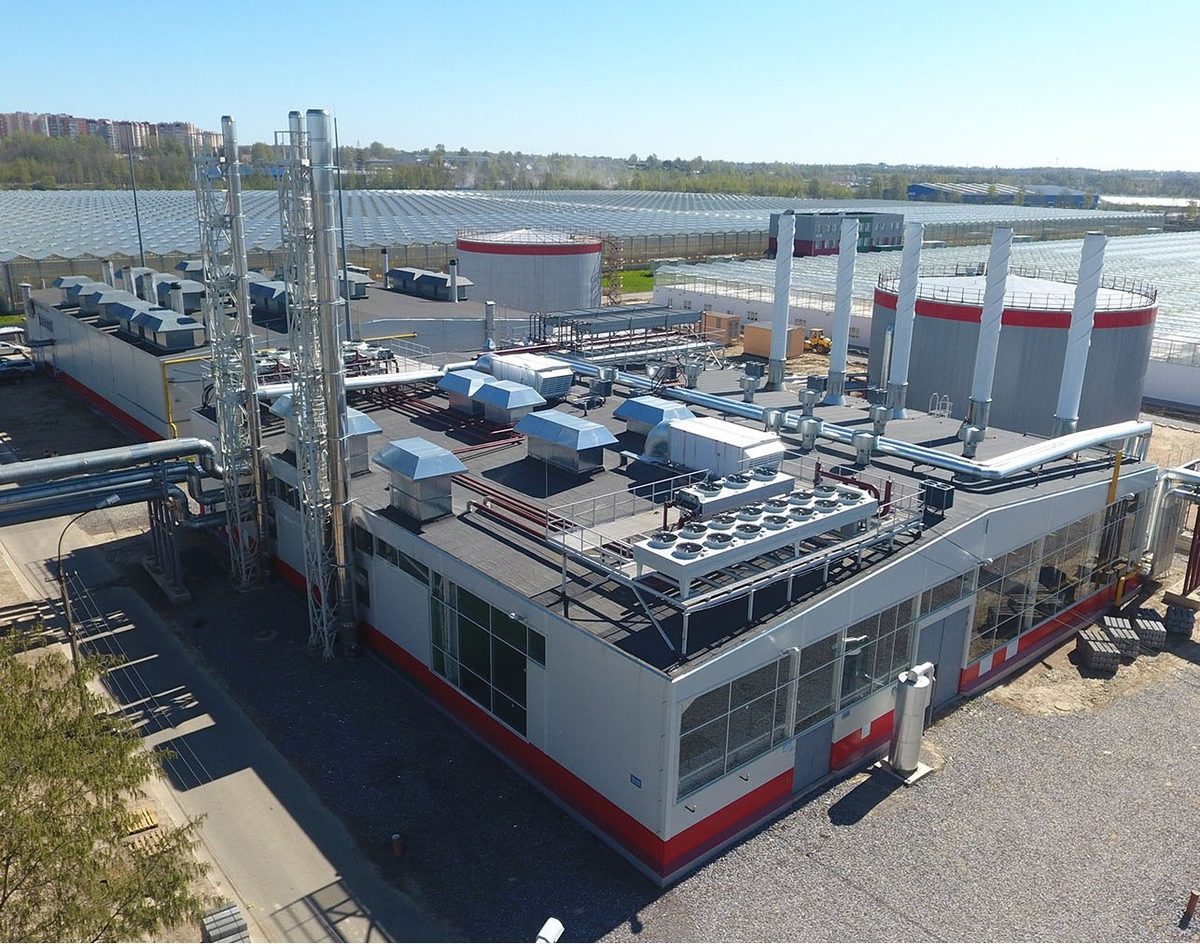
- Teplichnoye greenhouse complex (in Russian): two absorption chillers on waste hot water from gas engines and a boiler house deliver water down to 3.5 °C. Heat and electricity costs per hectare were cut by half.
- Vyborzhets agricultural complex (in Russian) and Aktivny Komponent (in Russian), Leningrad Region: hot water-fired absorption chillers as part of energy centers with gas engines.
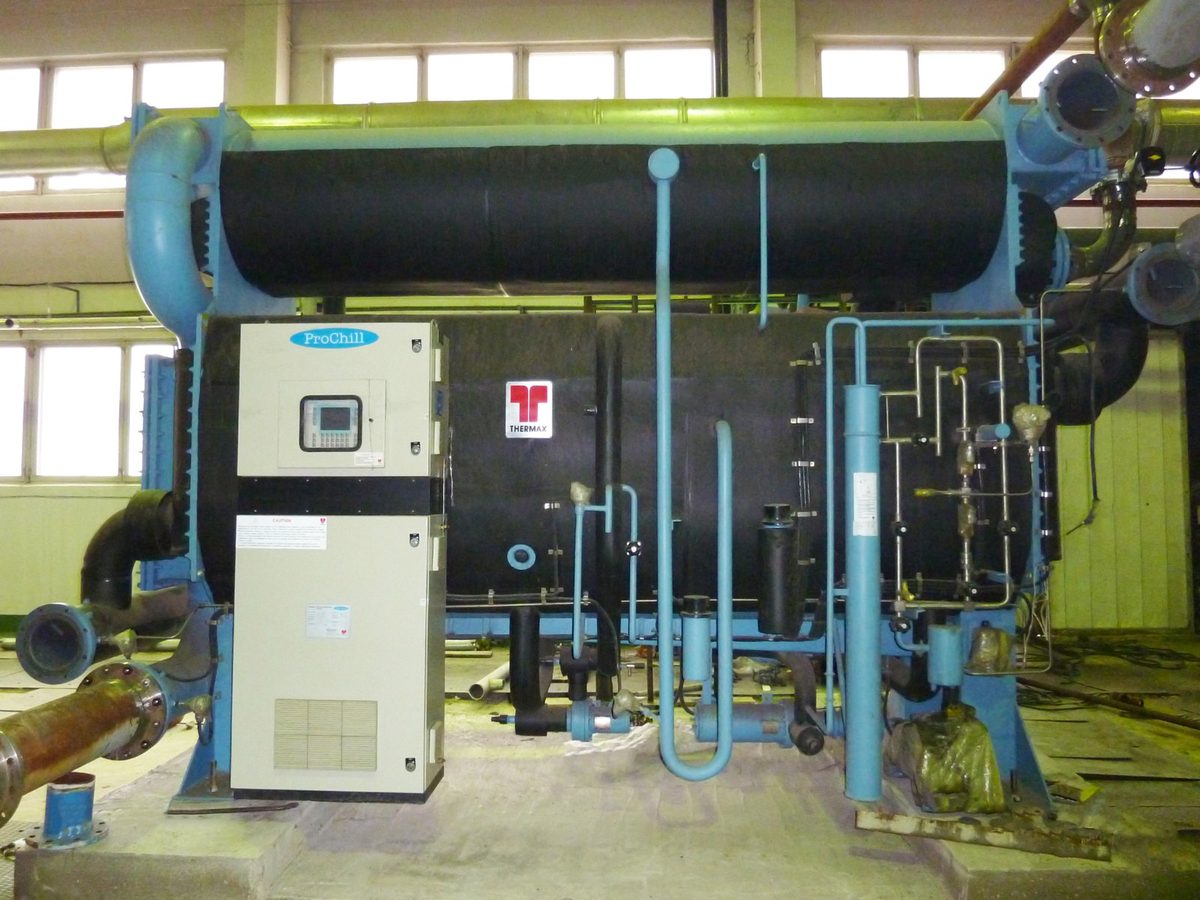
- Chips and croutons plant (in Russian), Moscow Region: a 1,000 kW 5G 4L C absorption chiller runs on hot water from a heat recovery unit on the frying oven and cools the workshops; an NCT VR3 cooling tower cools the machine.
- Apsheronsk woodworking complex (in Russian), Krasnodar Territory: a 1,500 kW 2B 4L C steam-fired absorption chiller; the steam comes from boilers that burn sawdust, and the cooling goes to the resin production equipment.
Selected projects are in the Projects section, and customer reviews are on the Reviews (in Russian) page.
How does a project run?
- Engineer consultation: we assess the waste heat sources and the demand for cooling or heat.
- Concept, layout options and a feasibility study.
- Design at our engineering center.
- Equipment supply, installation supervision and commissioning.
The consultation, layout options and feasibility study are free of charge.
Resources
- All about Thermax absorption chillers (in Russian)
- The guide "5 industrial cooling schemes: cut cooling power use up to 10 times" can be sent to you by email or Telegram: request it on the guide page. One 1,000 kW task is worked through five schemes; an absorption chiller on waste steam draws about 60 kW from the grid versus 333 kW for a packaged chiller.
Cooling schemes
Typical schemes we use in this industry. The numbers on the diagram are the piping components; the key is under each diagram.
Steam-fired absorption chiller: cooling from waste heat
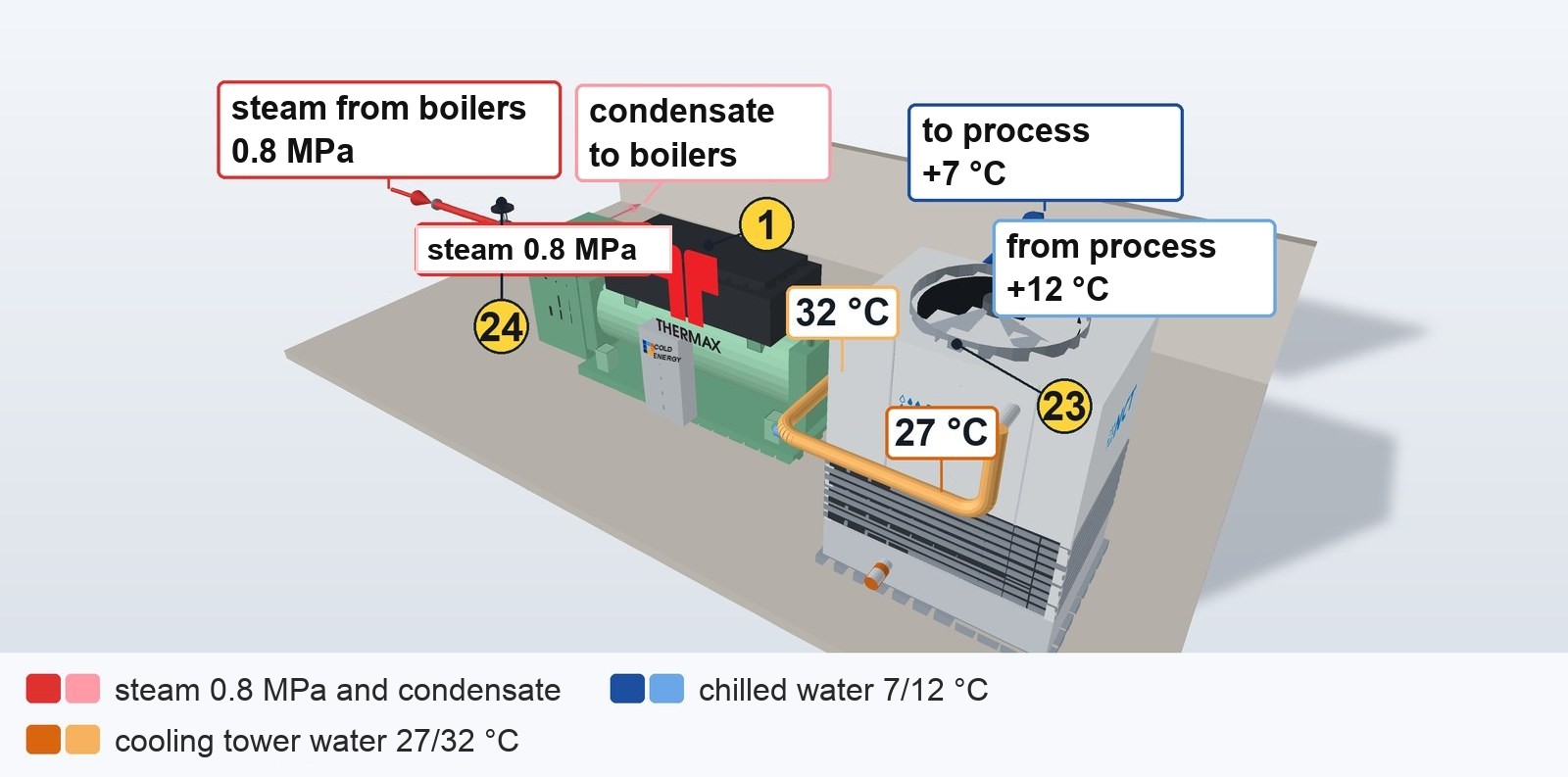
Steam heats the machine's generator, chilled water goes to the process, and the heat of absorption goes to the cooling tower.
Key to the numbers on the diagram
| No. | Component | Purpose |
|---|---|---|
| 1 | Steam-fired Thermax absorption chiller | steam heats the solution, and the machine delivers chilled water without a compressor |
| 23 | NCT cooling tower | rejects the heat of absorption: there is more of it than from a compressor machine of the same capacity |
| 24 | Steam control valve | meters the steam according to the load: the machine holds +7 °C at the outlet |
Hybrid scheme: dry in winter, wet in summer
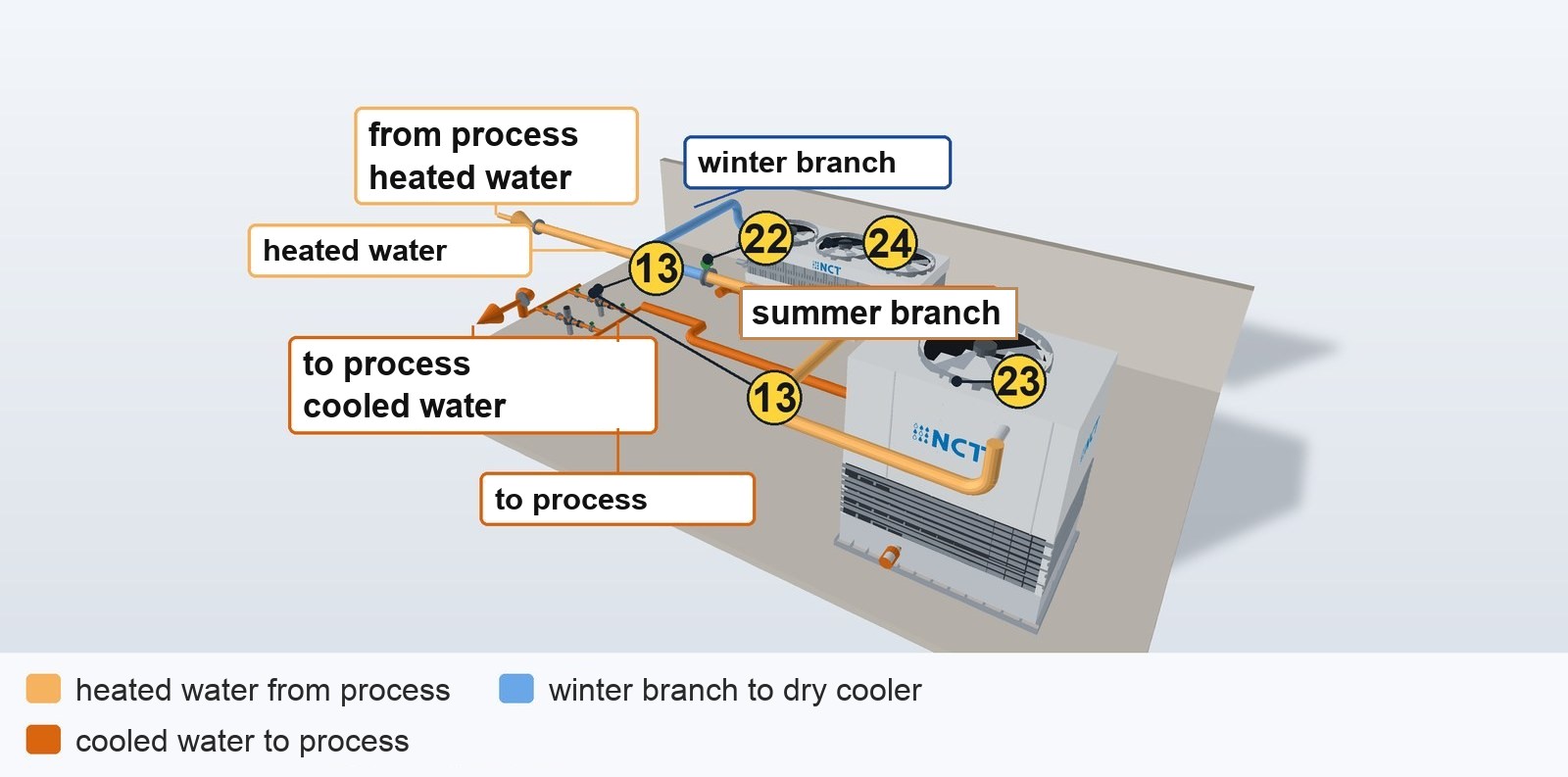
In the cold months, the dry cooler removes the heat and no water is consumed; the evaporative stage is switched on only in hot weather.
Key to the numbers on the diagram
| No. | Component | Purpose |
|---|---|---|
| 3 | Butterfly valve | isolates the machine and pumps for repair and flushing; installed in pairs, inlet and outlet |
| 5 | Flexible connector (vibration isolator) | right at the nozzle: damps vibration, does not transfer the pipe's weight and misalignment to the nozzle |
| 13 | In-line pump | circulates water through the circuit; in a pair, duty + standby |
| 14 | Check valve | prevents water from flowing back through the idle pump |
| 22 | Cooling tower three-way bypass valve | sends part of the water past the cooling tower: the water to the machine is not overcooled (for an absorption chiller, there is a risk of crystallization) |
| 23 | NCT cooling tower: summer stage | switches on when dry cooling is no longer enough |
| 24 | NCT dry cooler: dry stage | works without water: no blowdown, no chemicals, no icing |
Frequently asked questions
Can the hot water that a combined heat and power plant sends to its cooling towers be used for other needs?
Yes, if there is someone nearby to take this heat. It will not give cooling: before the cooling tower, the water is much colder, and a machine needs at least 80 °C to produce cooling. Such water is upgraded by an absorption heat pump: it takes in 25–50 °C, delivers 60–105 °C and additionally needs steam, gas or hot water. The economics are based on the smallest of the three: the operating hours of the plant, of the consumer and of the driving heat source.
An absorption heat pump: there are few cases in Russia, and in our calculation it does not pay off. How can this be checked and management convinced?
First recalculate the hours; that is where the error most often lies. If the consumer is space heating for 4,600 hours, a calculation based on the source's 8,400 hours will overstate the savings almost twofold. For a gas-fired machine, take a coefficient of 1.46 from the meter, not 1.72. If it still does not add up after that, there is nothing to pay off: without a free heat source, a boiler is simpler. We have experience, for example, a pulp and board mill in Svetlogorsk.
Does an absorption heat pump need a separate building?
As a rule, yes, and it is included in the budget from the start. The machine is insulated and installed in a hall at +5…+45 °C; otherwise, the selection is not valid and there is no capacity guarantee. A turnkey scope includes surveys and the building, piping, power supply and controls with an interface to the plant's process control system. For an estimate, a site plan with the connection points for the low-grade heat, the heated water, steam and condensate is needed. Before the design stage, the cost is preliminary.
Where should the heat of an absorption heat pump go in summer, when space heating is off?
To a backup heat sink: a cooling tower or a dry cooler for the remaining capacity. Without it, the machine hits the upper temperature limit and goes into dilution, and the steam is wasted. This unit is included in the design from the start. At the same time, calculate how many months the consumer actually takes heat: the savings depend on this, not on the rated coefficient.
We will calculate the system for your facility free of charge: submit a request or call +7 (800) 333-49-96.
Watch: absorption chillers (in Russian)
Thermax hot-water absorption chillerLet us size a cooling system for your site
An engineer will select the equipment and send you a calculation. Free of charge, no obligation.