
Trigeneration
In brief. We build trigeneration energy centers where, in summer, the heat of gas engine generator sets goes not into the atmosphere but into Thermax absorption chillers and is turned into cooling. This way the generation runs year-round, and the overall efficiency of the energy complex rises to 75–85%.
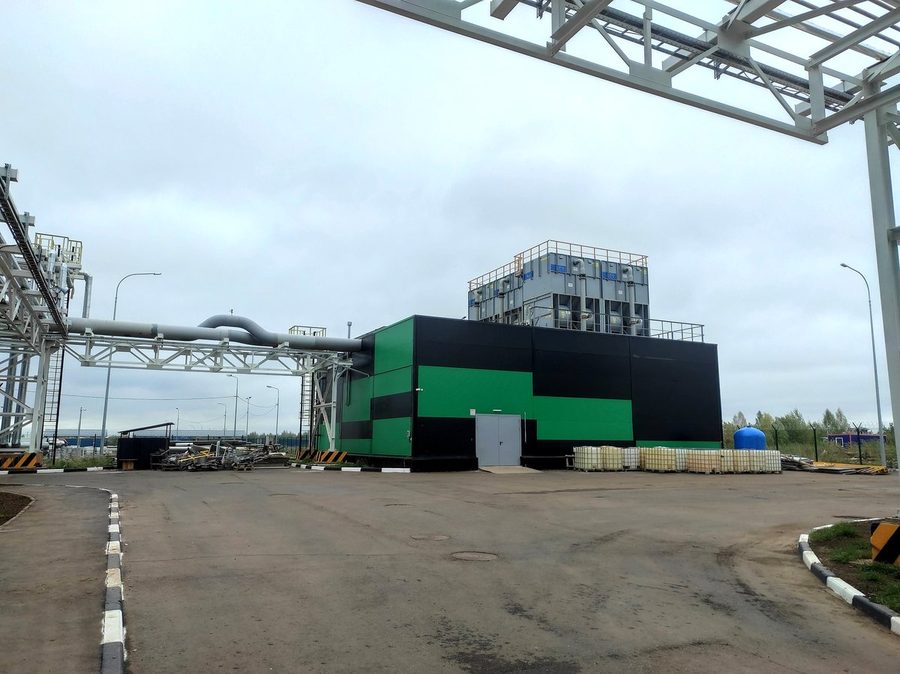
Trigeneration (CCHP, combined cooling, heat and power) is the production of three kinds of energy at once: electricity, heat and cooling. We assemble trigeneration plants based on Thermax lithium bromide absorption chillers, Jenbacher gas engine generator sets, NCT cooling towers and equipment from other proven brands.
| Parameter | Value |
|---|---|
| Overall efficiency of the energy complex | 75–85% versus 35–40% when producing electricity alone |
| Absorption chiller service life | more than 25 years, according to the manufacturer |
| Chilled fluid temperature | down to +1 °C in standard Thermax ranges, down to −5 °C for two-stage machines in a special version |
| Exhaust heat recovery (Thermax Trigenie) | 12–15% more than with conventional heat exchange equipment |
Why do you need trigeneration if there is cogeneration?
Cogeneration (CHP) is the simultaneous production of electricity and heat. In winter the heat goes to space heating, but in summer there is often nowhere to put it, and the overall efficiency of the plant drops.
Trigeneration solves this problem. A lithium bromide absorption chiller takes the heat from generation and turns it into cooling for air conditioning or process needs. The generating plant runs year-round, and the cost of energy becomes minimal.
Energy demand and energy prices are rising, so on-site generation more and more often turns out to be cheaper than power from the grid.
The types of trigeneration (based on gas engines, gas turbines, microturbines, steam), feasibility study calculations and an analysis of why projects sometimes do not pay back are collected on our industry website 3genia.ru (in Russian).
What scheme do we use?
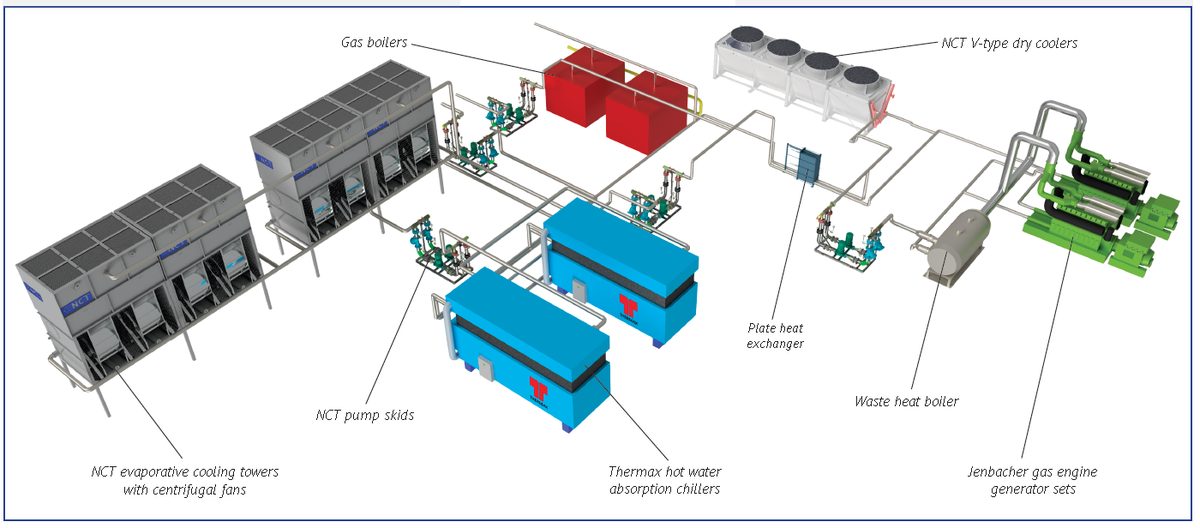
The energy complex is a cogeneration plant combined with an absorption chiller:
- the gas engine generator set produces electricity;
- in winter, the heat of the gas engine goes to heat supply;
- in the warm season, this heat goes to the Thermax absorption chiller, which delivers chilled water;
- NCT cooling towers reject the heat from the absorption chiller.
Who is trigeneration for?
All sites with a centralized heating, ventilation and air conditioning system:
- industry: power generation, metallurgy, the chemical, paper and food industries, dairy plants, fish processing plants, food manufacturers;
- data centers and telecommunications;
- commercial real estate: office and business centers, technology parks, shopping and entertainment centers, supermarkets, hotels, restaurants;
- infrastructure: airports, health resorts, public facilities;
- agriculture: farming, greenhouses, cold stores and food storage facilities.
What equipment do we install?
- Thermax absorption chillers: absorption chillers driven by hot water, steam, exhaust gases or natural gas. An exhaust-fired machine can take 275–600 °C gases from several engines at once, with a separate generator for each. The Trigenie series uses both the exhaust and the jacket water: a separate generator cools the jacket water down to 70–75 °C, so more heat is recovered, including at part load of the engine.
- Jenbacher gas engines: gas engine generator sets for producing electricity and heat.
- NCT cooling towers: heat rejection from the absorption chillers.
- NCT pump skids, chemical water treatment systems and controls.
Which projects have we already completed?
| Site | Generation | Thermax absorption chillers | Use of the cooling |
|---|---|---|---|
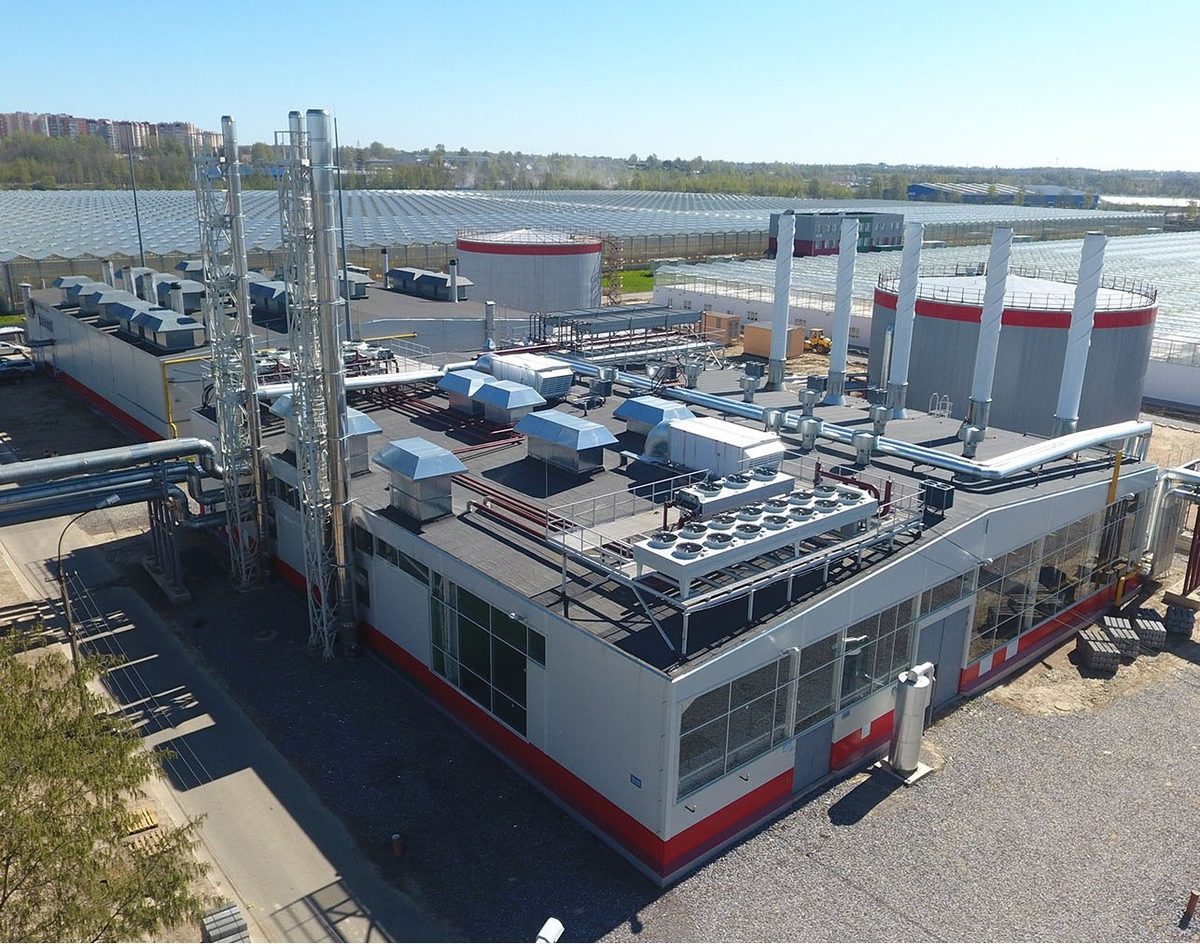
| Vyborzhets agricultural complex (in Russian), Leningrad Region | 4 GE Jenbacher gas engine units, 4.3 MW; 3 MWM TCG 2032V16 gas engine units | two 5G 6LH driven by hot water, 3.8 MW in total | air conditioning |
| Aktivny Komponent (in Russian), Leningrad Region | two Jenbacher J320 gas engines | two TAC L5 E3, 2 × 1,430 kW | process lines and premises |
| Mikran plant (in Russian), Tomsk | gas engine, 1.7 MW | two 5G 4L C, 2 × 1,100 kW | air conditioning |
| Teplichnoye JSC (in Russian) | JMS 624 and JMC 320 gas engines, 48 MW | two LT 12 C, 2 × 400 kW | air conditioning of the packing area |
| Syry Kubani (in Russian), Krasnodar Territory | 4 MTU gas engines, 1,948 kW each | 5G 7L C, 3,500 kW | chilled water and air conditioning |
| Aray City Mall shopping center (in Russian), Kazakhstan | gas engine | 5G 4L C driven by hot water and 2V 3L C gas-fired, 1,100 kW each | air conditioning of the shopping center |
| Moscow Region Government House (in Russian), Krasnogorsk | four Jenbacher cogeneration modules, 12 MW | three LT42 T driven by hot water, 6 MW in total | central air conditioning; the first trigeneration site of this size in Russia |
| Mekhta oil and gas equipment plant, Samara | the plant's trigeneration complex | TAC L1 P2 driven by hot water, 600 kW, NCT SVA cooling tower | air conditioning of the workshops and chilled water for production; the machine replaced the powerful refrigeration units used before |
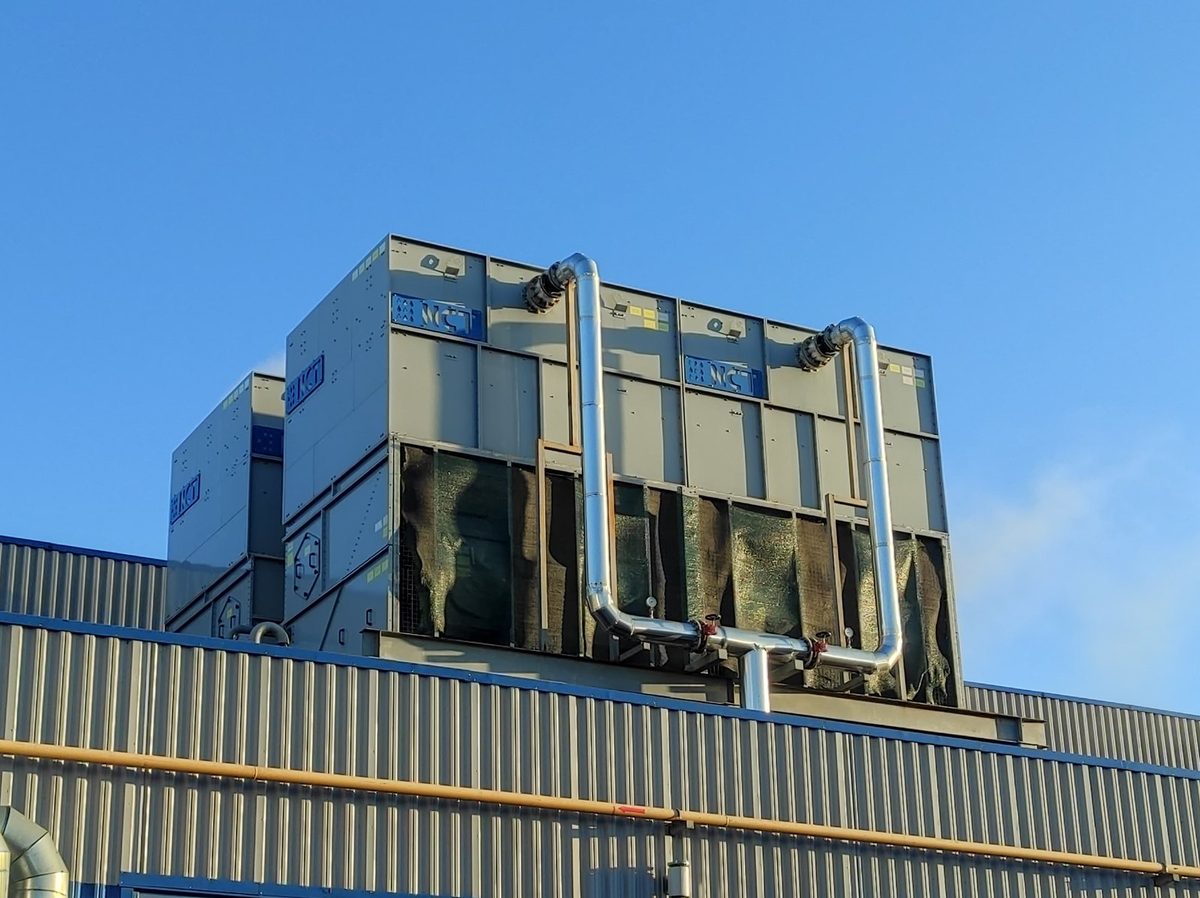
At the greenhouse complex from the list above, the first trigeneration system in Russia for a greenhouse complex was built. The absorption chiller runs on waste hot water from the gas engines and the boiler house, the energy efficiency of the complex is up to 92%, and the payback period is 5 years.
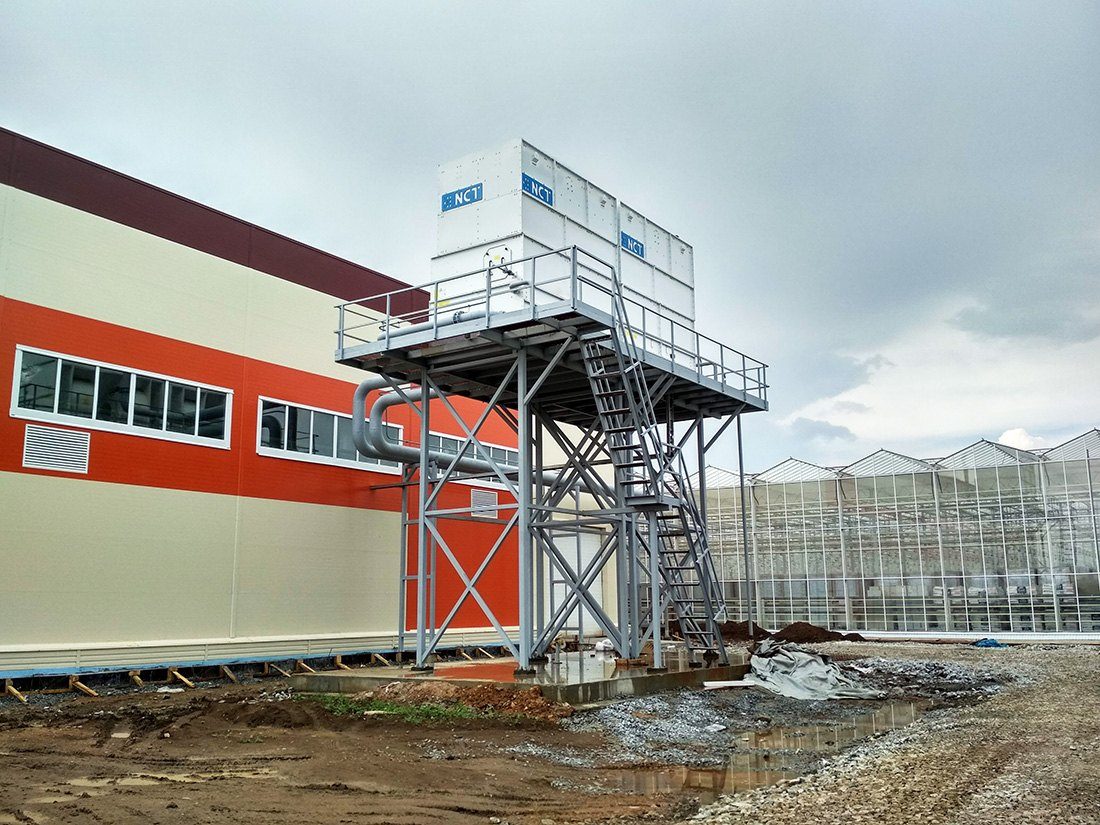
At the Tomsk plant, the main difficulty was matching the gas engine power plant and the absorption chillers in the transitional seasons and at low load. In summer there is no use for the heat of the gas engines, so the absorption chiller turns it into low-cost cooling.
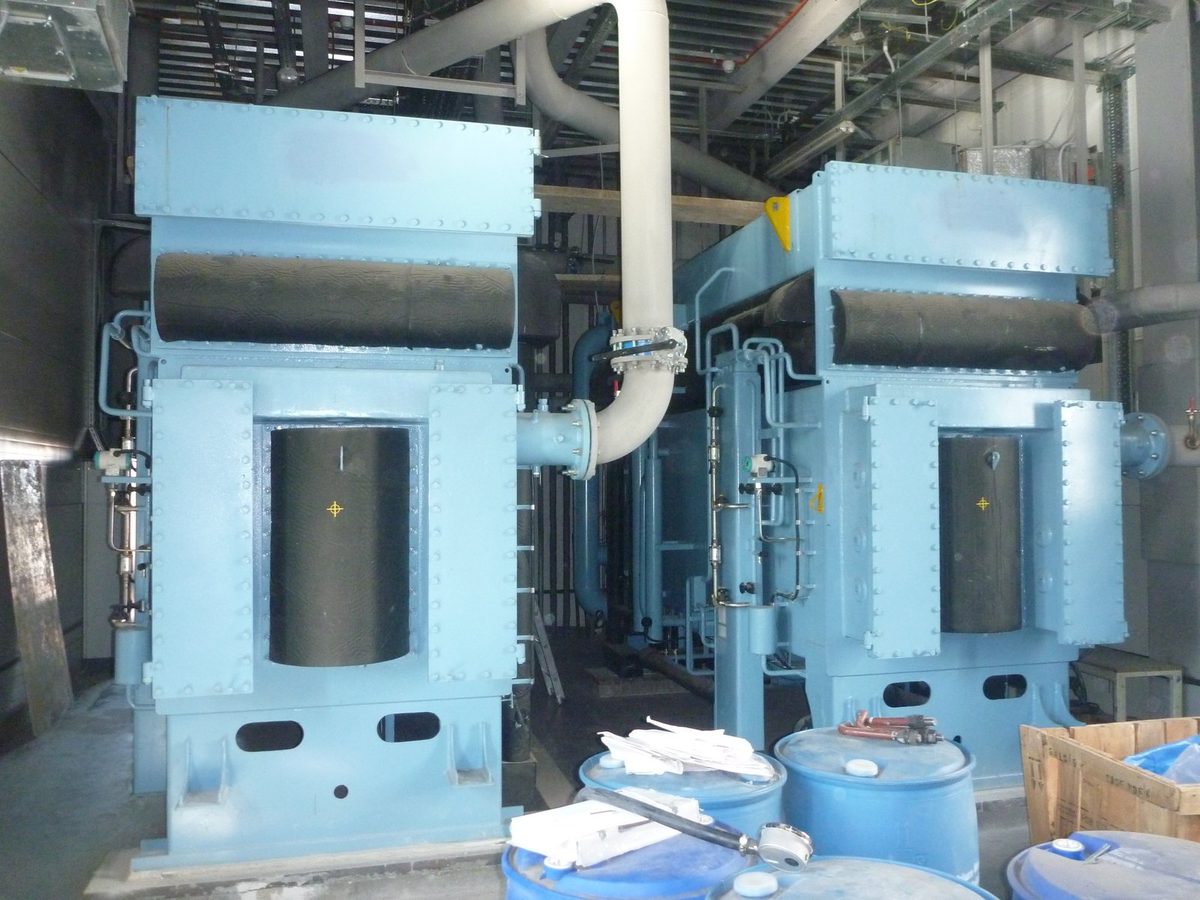
More examples: the Central Customs Administration (in Russian) in Moscow (five Capstone C200 microturbines and two 500 kW absorption chillers) and the Döhler food ingredients plant (in Russian) (an absorption chiller driven by gas engine heat cools the pasteurizers).
All trigeneration projects are in the "Projects" section.
How does a project go?
- Engineer consultation and the overall concept.
- Technical specification and a step-by-step plan.
- Equipment layout options and a feasibility study.
- Design, supply, installation supervision and commissioning.
The engineer consultation, layout options and the feasibility study are free of charge.
Trigeneration catalog: download PDF (in Russian).
If on-site generation is not needed, compare four heating and cooling schemes in the four-options calculator: a direct-fired absorption chiller-heater, boilers with a centrifugal chiller, boilers with a hot water absorption chiller, and boilers with packaged chillers. For a site with 3,000 kW of heating and 2,300 kW of cooling in St. Petersburg, the best and the worst options are RUB 25 million apart over 10 years: open the calculator on its page.
Cooling system schemes
Typical schemes we use in this industry. The numbers on the scheme are piping elements; the key is under each scheme.
Direct-fired absorption chiller on natural gas
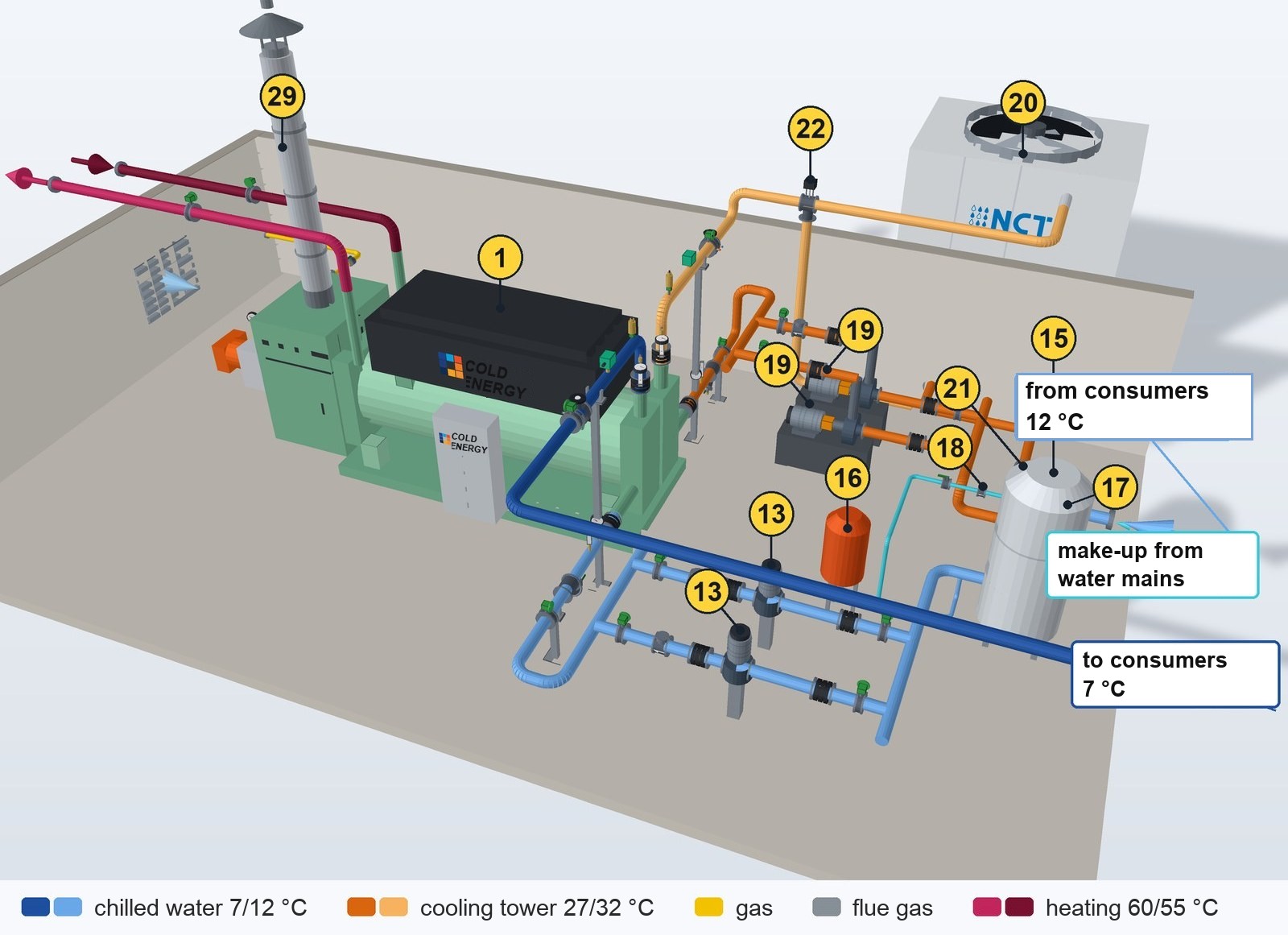
Gas goes through the gas train to the burner, flue gas to the stack; chilled water goes to the consumer, cooling tower water passes through the absorber and the condenser, and in winter hot water can be taken for space heating.
Key to the numbers on the scheme
| No. | Element | Purpose |
|---|---|---|
| 1 | Direct-fired absorption chiller (gas) | cooling from the heat of gas combustion; the refrigerant is water, the absorbent is lithium bromide |
| 3 | Butterfly valve | isolates the machine and pumps for repair and flushing; installed in pairs, at the inlet and the outlet |
| 4 | Y-strainer | catches scale and debris before the unit's tubes; at the INLET only |
| 5 | Flexible connector (vibration isolator) | right at the nozzle: dampens vibration and does not pass the weight and misalignment of the pipe on to the nozzle |
| 6 | Thermometer in a thermowell | inlet and outlet temperature: the difference shows the load |
| 7 | Pressure gauge with a valve | pressure upstream and downstream: the differential = flow rate and tube fouling |
| 8 | Drain valve | drains water from the unit and the loop; at the lowest point |
| 9 | Pipe support | carries the weight of the pipe and fittings: the machine nozzle is not loaded |
| 10 | Automatic air vent | at the very highest point: releases air (noise, corrosion, pump air lock) |
| 11 | Flow switch | no flow, no machine start; a paddle flow switch needs straight runs of ≥5 DN |
| 12 | Balancing valve | sets the design flow rate through the unit; the test nipples are for the meter |
| 13 | In-line pump | circulates water through the loop; in pairs: duty + standby |
| 14 | Check valve | prevents water from flowing back through an idle pump |
| 15 | Buffer tank | a reserve volume of water: the machine does not switch on and off often |
| 16 | Diaphragm expansion tank | takes up the expansion of the fluid when heated and holds the pressure at the pump suction |
| 17 | Makeup unit: valve | loop makeup; the valve is for manual shut-off |
| 18 | Makeup unit: backflow protection (shown conventionally as a check valve in the picture) | the loop fluid must not get into the drinking water supply: one ordinary check valve is not enough; a double check valve, a reduced pressure zone (RPZ) valve or an air gap is needed; with glycol or chemicals, only an RPZ valve or an air gap; the type follows the water utility's technical conditions |
| 19 | End-suction pump (duty + standby) | axial inlet, top outlet; the motor is on a common base frame |
| 20 | NCT open cooling tower | cools water by evaporating part of it into the air |
| 21 | Coarse screen at the cooling tower pump suction | protects the pump from leaves and large debris: mesh 4.8–6.4 mm, low pressure drop, a basin outlet screen is better; a fine strainer is not installed at the suction, it goes after the pump and at the condenser inlet (element 4) (B&G TEH-1209A, pp. 14–16) |
| 22 | Cooling tower three-way bypass valve | sends part of the water past the cooling tower: the water going to the machine is not overcooled (for an absorption chiller, there is a risk of crystallization) |
| 23 | Gas train: ball valve | manual gas shut-off at the gas train inlet |
| 24 | Gas train: gas filter | traps dust and scale, otherwise the valves will not close tightly |
| 25 | Gas train: pressure gauge / pressure switch | gas pressure monitoring; the min./max. pressure switches are part of the burner protection |
| 26 | Gas train: pressure regulator | reduces the gas pressure to what the burner needs and keeps it constant |
| 27 | Gas train: two solenoid valves | double shut-off: the gas closes instantly in an emergency or if the flame goes out |
| 28 | Gas burner | burns gas in the high-temperature generator |
| 29 | Insulated flue | takes the flue gases above the roof; the insulation protects against burns and condensate |
| 30 | Combustion air intake louvers | the burner needs air: without an air supply there will not be enough oxygen in the room |
Steam-driven absorption chiller: cooling from waste heat
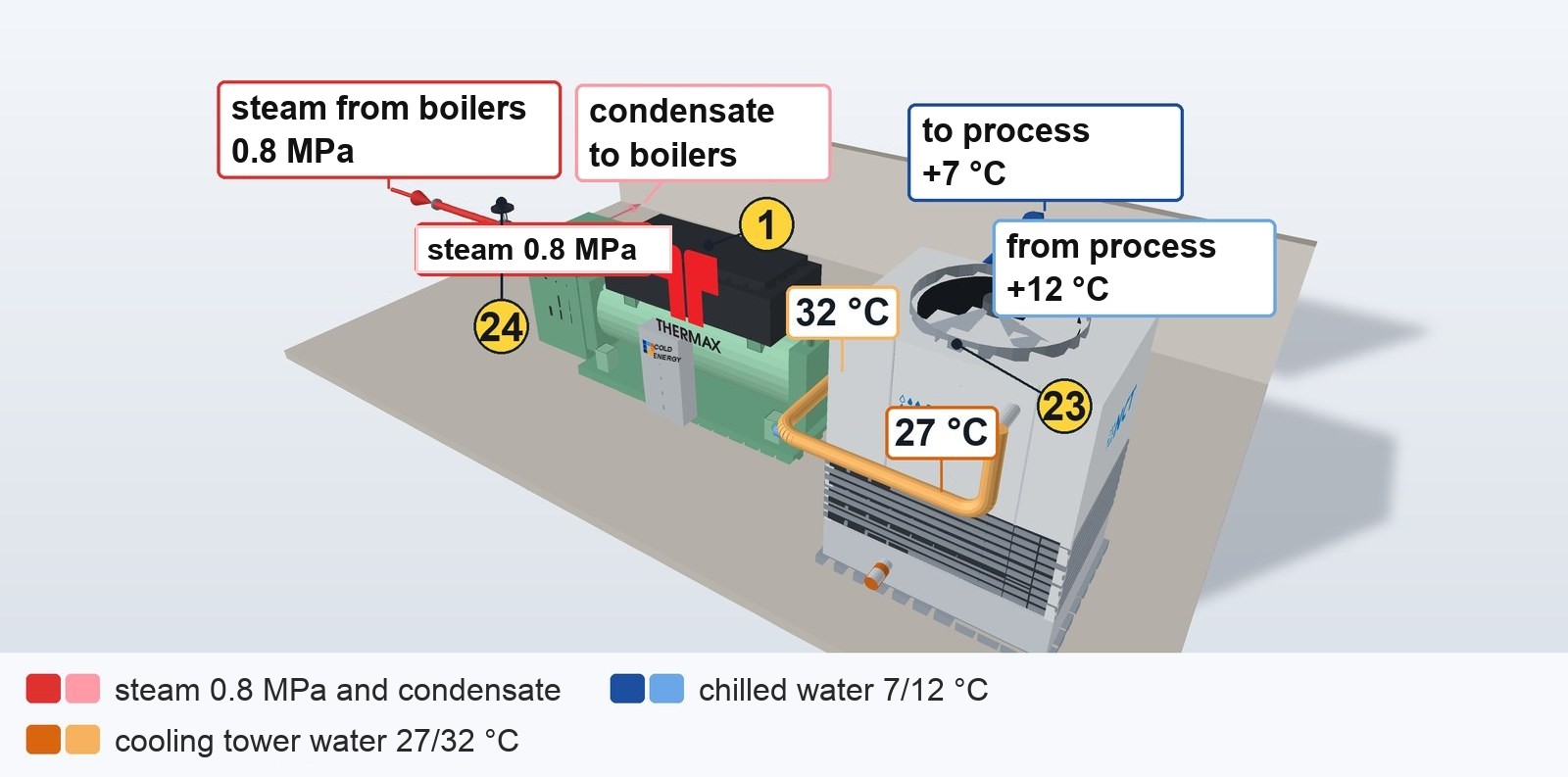
Steam heats the machine's generator, chilled water goes to the process, and the heat of absorption goes to the cooling tower.
Key to the numbers on the scheme
| No. | Element | Purpose |
|---|---|---|
| 1 | Steam-driven Thermax absorption chiller | steam heats the solution, and the machine delivers chilled water without a compressor |
| 23 | NCT cooling tower | rejects the heat of absorption: there is more of it than with a compressor machine of the same capacity |
| 24 | Steam control valve | meters the steam according to the load: the machine holds +7 °C at the outlet |
Frequently asked questions
Which type of absorption chiller is better with a gas engine: one on jacket water or one on exhaust?
It depends on what heat you have available. A single-stage machine is used for jacket water at 90–95 °C. Free exhaust gives almost twice as much cooling from the same heat. The price of that: a calculation of the engine back pressure, a diverter damper, and selection against the curve at 100, 75 and 50% load. The exhaust temperature rises as the load falls. For the calculation we need the gas flow rate and temperature and the jacket water curve.
How does a gas engine, absorption chiller and cooling tower set work in severe frost?
If cooling is not needed in winter, the absorption chiller stands idle and all the heat goes to space heating. If it is needed year-round, that is possible, but it will require separate solutions. The machine itself is in a warm room. Outdoors, the dangers are freezing and overcooling of the water, hence the winter kit and the bypass on the cooling tower, and a complete stop of circulation is not acceptable. We do not recommend replacing the water with antifreeze: its heat capacity is worse, and it has different requirements for seals.
How do we provide N+1 redundancy for gas engines and absorption chillers?
A standby gas engine does not reach its rated output at once, and the heat supply dips for those minutes. The dip is covered by spare engine capacity or by a gas-fired hot water boiler house. Redundancy is needed on the cooling side too: the absorption chiller itself takes about 30 minutes to reach its operating mode, so for a continuous process a cold storage tank or a chiller is kept next to it. The control panel is powered from a UPS: without power for longer than 3 minutes, the solution may crystallize.
We will buy electricity, the price is good. Why do we need gas engines with absorption chillers?
Perhaps you don't; that is checked with numbers. In a model calculation for a dairy plant with 2 MW of cooling, the difference in investment pays back in 2.2 years, and at other gas prices and tariffs the payback period lies between 1.6 and 4.1 years. Below 2,000 operating hours a year and below 300 kW of cooling, an absorption chiller does not pay back. You can estimate the payback for your hours and tariff in the trigeneration calculator (in Russian). Count the downsides too: there are two service contracts, and gas limits are not granted everywhere. If the question is only about cooling, a gas-fired absorption chiller without gas engines may be enough.
We will calculate the system for your site free of charge: submit a request or call +7 (800) 333-49-96.
Watch: power generation (in Russian)
Thermax absorption chillers at a gas turbine power plant in KazakhstanLet us size a cooling system for your site
An engineer will select the equipment and send you a calculation. Free of charge, no obligation.